Why Use Secure Reputation Platforms in B2B Sales

Secure reputation platforms give B2B sales and marketing teams a concrete competitive edge: verified customer testimonials that prospects actually trust. Here is the short answer on why they matter:
- 90% of B2B buyers start vendor evaluation with a branded search, so what they find first determines whether you get a conversation at all.
- A single negative page-one result costs roughly 22% of potential customers before your team ever makes contact.
- Verified social proof shortens sales cycles by reducing the trust-onboarding work that would otherwise happen over multiple calls.
- Proactive testimonial management is cheaper and more effective than crisis repair after damage is done.
- Identity-centric verification blocks fake and AI-generated reviews that corrupt trust signals.
- GDPR-compliant data handling keeps you on the right side of U.S. and international privacy expectations.
- Authentic advocacy compounds: each verified testimonial you add strengthens your brand’s authority in search and AI-generated answers over time.
Table of Contents
- Why secure reputation platforms belong in your B2B sales stack
- Benefits that move the needle for marketing and sales teams
- What makes a reputation platform genuinely secure and effective
- How Clareefai puts secure reputation features to work in B2B
- What the impact looks like in practice
- Challenges to expect when adopting these platforms
- Compliance and data privacy considerations you cannot skip
- Clareefai gives your sales team verified proof that closes deals
- Key Takeaways
Why secure reputation platforms belong in your B2B sales stack
A secure reputation platform collects, verifies, categorizes, and publishes customer testimonials and reviews through a system that ties each piece of feedback to a confirmed identity. That last part is what separates these platforms from a standard review widget or a G2 profile.
Traditional review systems rely on self-reported identities. The result is predictable: anonymous submissions, inflated ratings, and AI-generated spam that manipulates trust signals at scale. For a B2B buyer evaluating a six-figure software contract, a wall of unverified five-star reviews reads as noise, not evidence.
Identity-centric platforms solve this by anchoring every testimonial to a real customer, a real company, and a real context. AI-driven analysis then surfaces the advocates most likely to move a prospect forward, automatically. The platform becomes trust infrastructure, not just a content repository. Strong reputation management also improves rankings for both branded and non-branded search terms, which means your verified advocacy works for you in organic search and in AI-generated answer engines simultaneously.

Pro Tip: When evaluating any reputation platform, ask specifically how it handles identity verification. If the answer is “email confirmation,” that is not a secure system.
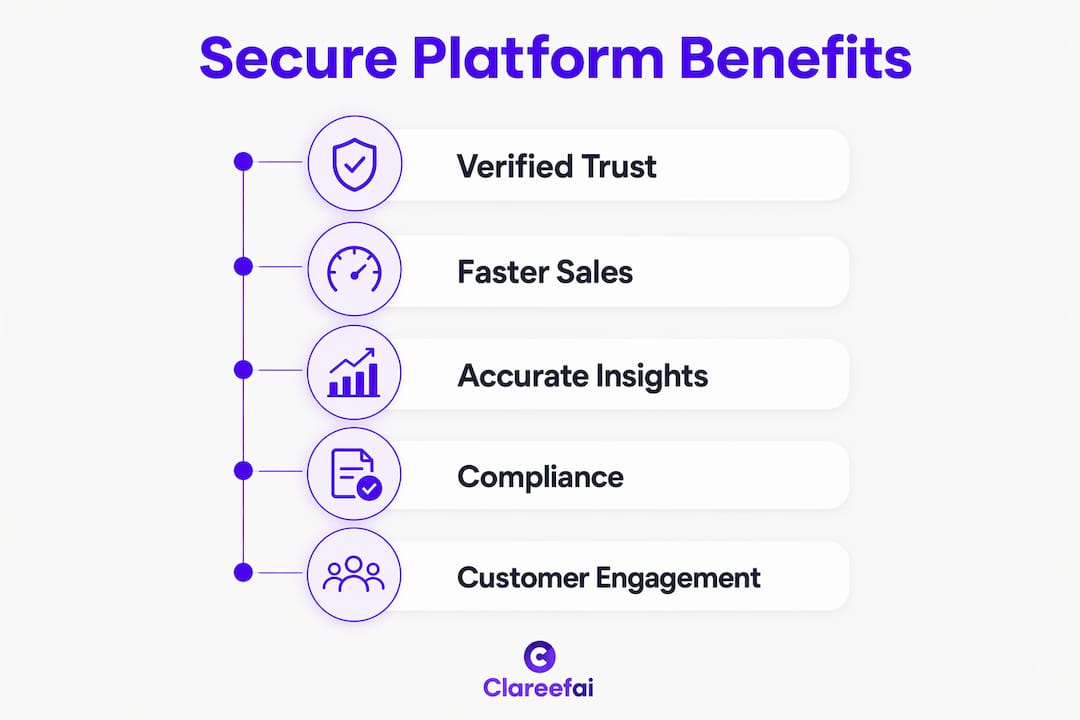
Benefits that move the needle for marketing and sales teams
The case for secure reputation services goes well beyond brand protection. Here is where you see direct impact on revenue:
- Shorter sales cycles. Verified testimonials reduce the trust-building work that normally happens across multiple discovery calls. Prospects arrive pre-convinced.
- Higher conversion rates. Displaying authentic reviews on product pages increases conversion rates by up to 270%.
- Pricing power. A documented track record of verified customer success lets you defend premium pricing without discounting to close.
- Better lead quality. Genuine advocacy attracts prospects who already understand your value, cutting qualification time.
- Multi-channel amplification. Verified testimonials published across CRM, review sites, and social platforms multiply reach without multiplying effort.
- Talent and employer brand. A visible, trusted reputation attracts candidates as well as customers.
- Crisis resilience. A library of proactive, verified advocacy is far harder to undermine than a reputation built on nothing. Reputation as a growth function means you are building an asset, not just playing defense.
For a practical look at how this plays out in real campaigns, the examples of reputation management that drive marketing ROI are worth reviewing.
What makes a reputation platform genuinely secure and effective
Not every platform that calls itself a “reputation tool” qualifies as secure. The features below are what separate a trusted reputation system from a basic review aggregator:
- Identity verification. Document checks via OCR, liveness detection, and biometric face matching confirm that the person leaving a testimonial is who they claim to be.
- Provenance tracking. Each testimonial is tied to a verified issuer, company, and context, so prospects can evaluate its relevance, not just its sentiment.
- AI-driven advocate identification. AI-powered analysis identifies which customers will have the most impact on a specific prospect and surfaces them automatically.
- GDPR-compliant data controls. Consent management, data minimization, and audit trails protect both your customers and your organization.
- Multi-role dashboards. Sales reps, marketers, and executives each need different views of the same advocacy data.
- Automated collection workflows. Testimonial requests triggered by CRM events remove the manual follow-up burden.
- Cross-channel integrations. Publishing verified content to review sites, LinkedIn, and your own site from one platform keeps messaging consistent.
For a deeper look at secure testimonial management practices, the tactical guide for marketers covers the full workflow.
How Clareefai puts secure reputation features to work in B2B
Clareefai is built specifically for mid-size and large B2B organizations that need more than a review badge. The platform centralizes testimonial collection, verification, and publishing across the entire sales funnel.
Its AI-powered promoter identification automatically matches the right customer advocate to the right prospect, based on industry, use case, and deal stage. That means your sales team is not manually hunting for a reference customer every time a deal stalls. Clareefai also supports video testimonials and reference calls, giving prospects the human connection that written reviews cannot replicate.
Role-specific dashboards give sales leaders, marketing teams, and customer success managers the data they need without requiring them to dig through each other’s views. GDPR-compliant dashboards with real-time data synchronization mean your advocacy library stays current and audit-ready. The result is a system where satisfied customers become active brand ambassadors at every stage of the funnel, not just at renewal.
What the impact looks like in practice
The clearest signal that secure reputation platforms deliver real sales outcomes comes from how they change the buyer’s journey. When a prospect encounters verified testimonials from companies in their own industry, with named contacts and documented results, the trust-onboarding phase compresses significantly.
Verified reputation accelerates market velocity by reducing the friction that normally slows B2B deals. Sales teams that use structured advocacy programs report fewer stalled deals at the proof stage, because the proof is already organized and credible before the conversation starts. You can see a concrete example of this dynamic in the unified testimonial management case study, which shows how a structured approach to verified advocacy improves win rates across a sales team.
Challenges to expect when adopting these platforms
Adoption is not frictionless. Here are the most common obstacles and how to address them:
Customer participation. Getting customers to complete a verified testimonial process takes more effort than a one-click star rating. The fix: time requests to moments of peak satisfaction, such as immediately after a successful onboarding or a resolved support issue, and make the process as short as possible.
Internal buy-in. Sales reps sometimes resist adding a new tool to their workflow. Positioning the platform as a deal-acceleration resource rather than a marketing asset changes that conversation. When reps see that verified references close deals faster, adoption follows.
Data quality at launch. A new platform starts with an empty library. Prioritize your top 20 accounts first, build a core set of high-quality testimonials, and expand from there. Trying to collect everything at once produces thin, rushed content.
Integration complexity. Connecting a reputation platform to your CRM and review channels requires IT involvement. Plan for a two-to-four-week integration window and document the data flows before you go live.
Compliance and data privacy considerations you cannot skip
U.S. B2B organizations operating with enterprise clients increasingly face contractual data privacy requirements that mirror GDPR standards, even when state law does not mandate them. California’s CPRA, Virginia’s CDPA, and similar state-level frameworks create a patchwork of obligations around how you collect, store, and use customer data, including testimonial content.
A secure reputation platform needs explicit consent workflows, data retention policies, and the ability to honor deletion requests. Building trust online also means being transparent with customers about how their testimonials will be used and where they will appear. Platforms that treat consent as an afterthought create legal exposure; platforms that build it into the collection workflow protect both parties.
AI-powered search engines now prioritize trust signals from verified, structured reputation data, which means your compliance posture directly affects your visibility in AI-generated answers. Structured, consented, verified data performs better in these systems than scraped or unverified content.
Clareefai gives your sales team verified proof that closes deals
Your prospects are already researching you before you know they exist. What they find shapes whether they book a call or move on.
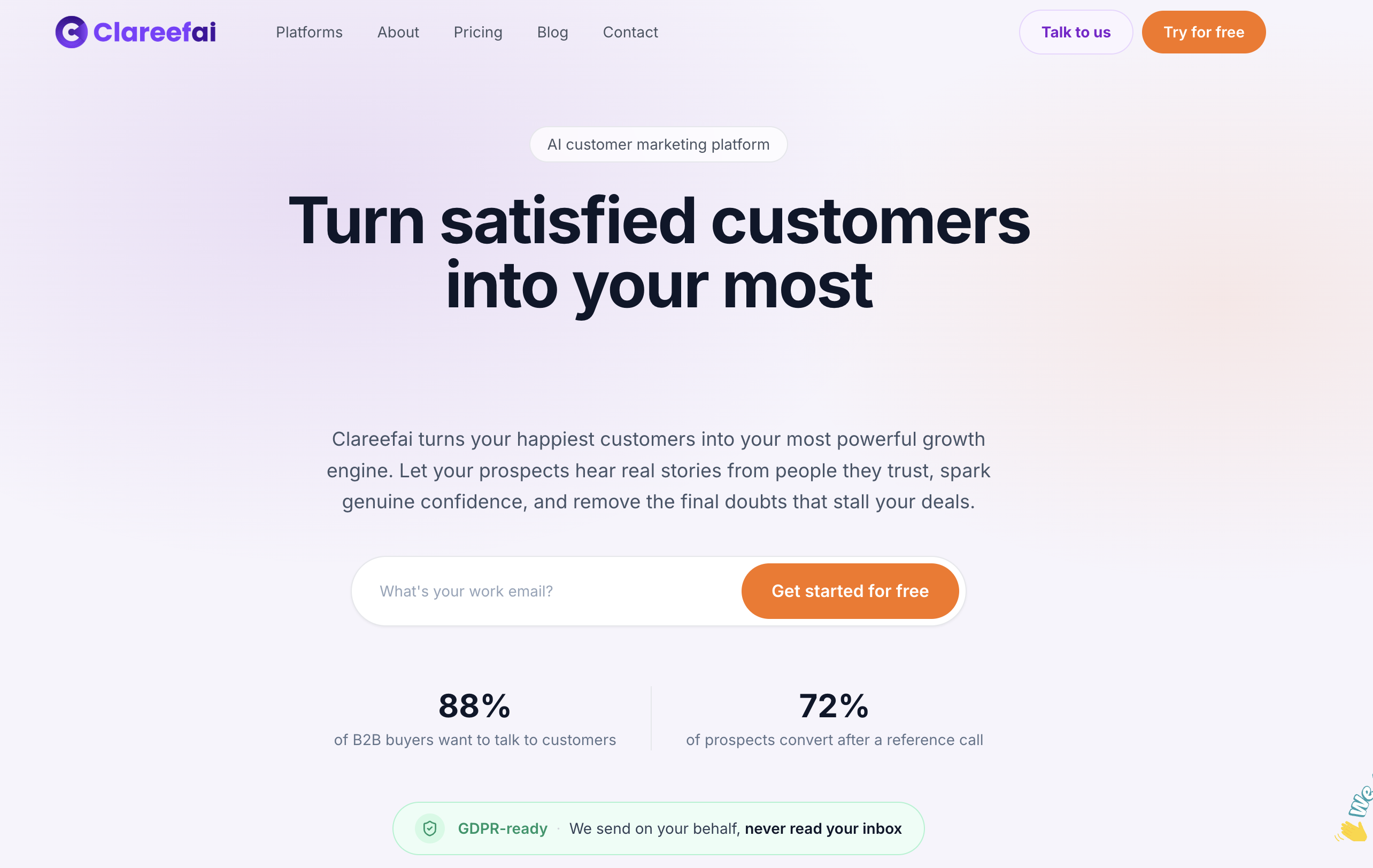
Clareefai gives B2B sales and marketing teams a centralized platform to collect verified testimonials, identify your best advocates with AI, and publish credible social proof across every channel where buyers look. No anonymous reviews, no manual reference hunting, no compliance gaps. The platform is built for organizations with real sales cycles and real stakes, with role-specific dashboards, GDPR-compliant data management, and automated workflows that fit into how your team already works.
See how Clareefai drives sales growth with verified customer proof, or explore the full platform capabilities to find the right fit for your team.
Key Takeaways
Secure reputation platforms are a direct revenue driver for B2B teams: verified testimonials shorten sales cycles, protect pricing power, and compound into a durable trust asset over time.
| Point | Details |
|---|---|
| Verified identity is non-negotiable | Platforms without identity verification are vulnerable to fake and AI-generated reviews that corrupt trust signals. |
| Conversion impact is measurable | Displaying authentic reviews on product pages increases conversion rates by up to 270%. |
| Proactive beats reactive | Building a library of verified advocacy before a crisis is cheaper and more effective than reputation repair after the fact. |
| Compliance is built-in, not bolted on | GDPR-compliant consent workflows and data controls protect both your customers and your organization from legal exposure. |
| Clareefai centralizes the full workflow | Clareefai collects, verifies, and publishes B2B testimonials with AI-driven promoter matching and role-specific dashboards. |
Recommended
Share Article
Stay Updated
Get the latest insights on customer advocacy and SaaS growth delivered to your inbox.