Revenue Teams: 6 Testimonial Data Governance Checks to Meet FTC Rules

Testimonial data governance is the set of policies, consent records, verification steps, and access controls that govern how you collect, store, use, and publish customer testimonials. The priority for 2026 is simple: build a short written policy paired with a verification step before anything goes live, because the FTC’s rule on fake reviews and testimonials now carries civil penalties, and tools exist to help you operationalize these controls without slowing your sales motion.
TL;DR:
- Building a verification step and a clear policy before publishing testimonials is essential to avoid FTC penalties and ensure content credibility.
- Assigning specific roles for policy ownership, verification, and content approval prevents gaps that could lead to unverified or false testimonials going live.
- Verification should combine automated checks like email and purchase verification with manual follow-ups for high-impact testimonials to catch manipulations.
- Maintaining detailed release forms with metadata, stored securely with audit logs, is crucial for legal defensibility and compliance with privacy laws.
- Every channel’s disclosure requirements differ; disclosures must be prominent in videos, social posts, and other formats to meet legal standards.
Table of Contents
- 1. Build an actionable governance checklist for your program
- 2. Roles and responsibilities: who owns each step
- 3. How the FTC’s testimonial rule maps to your controls
- 4. Verification and authenticity: practical steps that scale
- 5. Consent, release forms, and metadata for audit-ready records
- 6. Storage, retention, and access controls you can defend
- 7. Publishing and disclosure rules across every channel
- 8. Measuring whether your governance program actually works
- 9. Managing the risk of fake or manipulated testimonials
- 10. Fitting testimonial governance into your broader data governance framework
- 11. Sharing testimonial data with partners and third parties securely
- 12. Governing video and audio testimonials end to end
- 13. Applying GDPR and CCPA principles to testimonial data
- 14. Lessons from watching B2B revenue teams build these programs
- Clareefai’s approach to testimonial governance
- FAQ
- Sources
1. Build an actionable governance checklist for your program
Most testimonial programs grow organically: a sales rep asks a happy client for a quote, marketing drops it on a landing page, and nobody writes anything down. That pattern is exactly what creates risk. A working governance checklist closes the gaps before they turn into compliance problems or credibility hits.
Start with these six controls:
- Policy and scope: Define what counts as a testimonial (quotes, reviews, video clips, social posts, case study language) and which channels the policy covers.
- Consent and releases: Capture a signed release with standard fields every time, not just for your biggest logos.
- Verification: Confirm the person is real, used the product, and said what you’re publishing.
- Disclosure rules: Flag insider relationships and incentives before publication, not after a complaint.
- Recordkeeping: Keep retention schedules and logs that you can export on short notice.
- Monitoring and escalation: Set a clear path for flagging, correcting, or pulling down content that turns out to be false or disputed.
Pro Tip: Run your existing testimonial library through this checklist once before building new process, you’ll likely find gaps in old content that predate any policy.
2. Roles and responsibilities: who owns each step
Governance fails most often not because the rules are unclear, but because nobody owns them. Assign ownership before you write a single disclosure line.
- Policy owner: Usually the marketing or communications lead, responsible for keeping the written policy current and training new hires.
- Legal and compliance sign-off: Reviews release language, disclosure wording, and any testimonial involving an incentive or employee relationship.
- Verification operator: A customer success or marketing ops role that runs identity and usage checks before anything is approved.
- Publishing gatekeeper: The person with final authority to push a testimonial live across web, social, or sales decks.
- Escalation contact: A named person who handles disputed testimonials, takedown requests, or anything flagged as a red flag under FTC guidance.
Smaller teams can combine roles, but the handoffs between consent, verification, and publishing should never collapse into one person acting alone. That’s where unverified or stale content slips through.
3. How the FTC’s testimonial rule maps to your controls

The FTC’s Consumer Reviews and Testimonials Rule took effect on October 21, 2024, and it authorizes civil penalties for fake reviews, suppression of negative feedback, and undisclosed insider endorsements. The Federal Register’s Statement of Basis and Purpose lays out the rule’s prohibitions and the reasoning behind them in full legal text, which is worth bookmarking if legal needs the primary source during a review.
The rule also flags specific red flags that should prompt a closer look: reviews appearing in unnatural bursts, references to products the reviewer never bought, or testimonials posted suspiciously soon after purchase. You’re not required to investigate every single review, but you are expected to act when something looks obviously off.
If a business should have known a review was fake based on clear warning signs, that’s enough to trigger liability under the rule.
Turn that standard into two checklist items: a release template that captures proof of purchase, and one identity check before anything publishes. Both are fast to implement and directly address what examiners look for.
4. Verification and authenticity: practical steps that scale
Verification is the control that catches fake, exaggerated, or insider-sourced testimonials before they become a legal or reputational problem. You don’t need a forensic team, you need a consistent workflow.
Automated checks handle the first pass efficiently:
- Email domain match: Confirm the testimonial author’s email matches a known company domain in your CRM.
- Purchase record lookup: Cross-reference the name against an active or closed deal.
- Timing and pattern analysis: Flag testimonials submitted in unusual bursts or immediately after a product launch.
Manual checks cover what automation misses: a quick LinkedIn or HR confirmation of employment, a short reference call for high-value testimonials, and a signer identity check on the release itself. Clareefai’s six-step verification workflow builds both layers into one process, using AI to surface which advocates carry the most weight with prospects while flagging submissions that look inconsistent with CRM data.
Pro Tip: Reserve manual reference calls for your highest-impact testimonials, C-suite quotes and video references, where a false claim does the most damage.
5. Consent, release forms, and metadata for audit-ready records
Every testimonial needs a paper trail that survives a legal review months or years later. The release form is the anchor document, and it should capture:
- Identity fields: full name, job title, and company.
- Usage confirmation: a statement confirming the person actually used the product or service referenced.
- Scope of permission: which channels and formats the testimonial can appear in.
- Incentive disclosure: whether the person received payment, discounts, or free access in exchange.
- Signature and timestamp: a dated signature, digital or physical, tied to the release.
- Evidence attachments: purchase or order IDs, CRM record links, screenshots, or call logs that back up the claim.
Store metadata so every published testimonial links back to its release and verification record. Clareefai’s release form checkpoints give a usable template if you’re starting from scratch.
6. Storage, retention, and access controls you can defend
Once a testimonial is collected, where it lives matters as much as how it was collected. A defensible retention policy typically keeps records for the life of the testimonial’s public use plus a buffer period, with clear triggers for archival or deletion when a customer withdraws consent or churns.
- Role-based access: Limit who can view, edit, or delete testimonial records to the roles that need it.
- Encryption: Apply encryption at rest and in transit for stored releases and metadata.
- Immutable audit logs: Keep a tamper-resistant record of who accessed or changed a testimonial file and when.
- Exportable packages: Prepare a standard export format so legal can respond quickly to a discovery request or regulatory inquiry.
Clareefai’s guide to secure testimonial management walks through role-based access and audit-ready storage in more detail.
7. Publishing and disclosure rules across every channel
A testimonial that’s compliant on your website can become a problem the moment it’s clipped for a video ad or reposted on social. Each channel needs its own disclosure check.
- Placement: Put disclosures where a viewer can’t miss them, not buried in a footer or a video description nobody opens.
- Incentive transparency: If a discount or payment materially affected the rating, say so, especially in aggregated review summaries.
- Video and social: Disclosures should appear in both the visual and audible parts of a video when the format allows it.
- Consistency: Apply one moderation standard across channels so a testimonial approved for your blog doesn’t get repurposed without the same disclosure treatment on a partner’s channel, a risk covered well in this guide to influencer and endorsement disclosure practices.
8. Measuring whether your governance program actually works
Governance isn’t just a legal shield, it’s an operational program that should show measurable results. Track verification rate, time-to-verify, and the share of your public testimonials that carry a completed verification record. A rising removal rate for flagged content is a sign your monitoring is catching problems, not a sign of failure.
One metric worth watching closely: your reference-call-to-win ratio, since Clareefai’s use case data ties centralized, verified testimonial management to improved win rates for sales teams. Report these numbers to legal and revenue leadership on the same dashboard, monthly for operational metrics and quarterly for the business impact view.
9. Managing the risk of fake or manipulated testimonials
Identity verification catches the obvious cases, but manipulated testimonials often pass a basic identity check while still misrepresenting the customer’s actual experience. A real customer can submit a testimonial that overstates results, omits context, or was drafted by your own marketing team and just signed off by the client.
Build a second layer of review that looks past identity:
- Language review: Compare testimonial wording against how the customer actually communicates in support tickets or sales calls. A testimonial that reads like ad copy usually was written by someone other than the customer.
- Outcome checks: When a testimonial cites a specific result, confirm it against account data before publishing rather than taking the quote at face value.
- Pattern detection: Watch for testimonials arriving in clusters around a product launch or renewal push, a known red flag under FTC guidance.
- Edit trail: Keep a record of any edits made to a testimonial between collection and publication, and get re-approval from the customer if wording changes materially.
- Withdrawal path: Give customers an easy way to request a correction or removal if they feel a testimonial misrepresents what they said.
None of this requires new headcount. A short review step added to your existing publishing workflow, combined with automated pattern detection for surges or repeated phrasing across unrelated accounts, catches most manipulation before it reaches a prospect.
10. Fitting testimonial governance into your broader data governance framework
Testimonial records don’t exist in isolation. They touch customer PII, CRM data, and marketing content systems, which means your testimonial policy should plug directly into whatever broader data governance framework your company already runs.
Three connection points matter most. First, your data classification scheme should treat testimonial releases the same way it treats other customer PII, with matching access controls and retention rules rather than a separate, looser standard. Second, your data inventory or system-of-record mapping should include testimonial storage as a tracked data source, so a company-wide audit or breach response doesn’t miss it. Third, your incident response plan should name testimonial data explicitly, since a leaked release form carries the same exposure as a leaked customer record.

Mid-size and large B2B companies often run testimonial collection through marketing tools that sit outside IT’s visibility. Closing that gap means looping your data governance or IT security team into testimonial policy reviews at least annually, not just when legal flags a problem.
11. Sharing testimonial data with partners and third parties securely
Testimonials get shared outside your walls more often than most teams realize: a partner co-marketing a case study, an analyst requesting a reference customer, or a channel reseller using your testimonials in their own materials.
Before sharing, confirm the release’s scope of permission actually covers third-party use, since many release forms only authorize the collecting company’s own channels. Use a data-sharing agreement for any partner who will republish or repurpose testimonial content, spelling out how long they can use it and under what disclosure rules. Share the minimum necessary: a partner creating a joint case study needs the quote and attribution, not the customer’s full release file or contact details. Keep a log of every external share so you can track down and update or remove content if a customer withdraws consent later.
12. Governing video and audio testimonials end to end
Video and audio testimonials carry more governance weight than text quotes because they capture a person’s face, voice, and sometimes their physical environment, all of which raise the consent bar.
Collect a release specific to the recording itself, not a repurposed text release, covering how the footage can be edited, where it can be published, and whether it can be used in paid advertising versus organic content. Store raw and edited video files with the same access controls as release documents, since an unpublished raw file often contains more identifying information than the final cut. When editing, keep a record of any cuts or captions added, since altering context can shift a compliant testimonial into a misleading one. Publication should carry the same clear and conspicuous disclosure standard as text, visible on screen and, where relevant, spoken aloud rather than buried in video description text.
13. Applying GDPR and CCPA principles to testimonial data
A name, job title, company, and a quote in a testimonial release is personal data under most privacy frameworks, which means the same principles that govern customer records apply here too.
Capture consent that’s specific to the testimonial use case, not bundled into a general terms-of-service checkbox the customer clicked during onboarding. Honor deletion and correction requests for testimonial data the same way you would for any other customer record request, which means your testimonial repository needs to be searchable by customer name or account, not scattered across folders and slide decks. Limit what you collect to what you’ll actually use: a release form that asks for a home address or personal phone number when neither will ever appear publicly is collecting more than it needs. Document your legal basis for processing testimonial data (typically consent) in the same place you document legal basis for other marketing data, so a privacy audit finds one consistent answer rather than conflicting explanations from different teams.
14. Lessons from watching B2B revenue teams build these programs
The most common failure isn’t fraud, it’s inconsistency: one release form for enterprise clients, a casual email thread for everyone else, and social-media testimonials nobody logged at all. Siloed ownership between marketing and legal makes it worse.
The fastest fix is almost always a single standard release template, one verification checkpoint before publishing, and a searchable repository everyone on the revenue team can actually find.
**
Clareefai’s approach to testimonial governance
Running this checklist by hand across spreadsheets and email threads works for a while, then breaks the moment your testimonial volume grows. The platform centralizes the parts that create the most risk when they’re scattered: verification, consent records, and access control, in one place marketing, sales, and legal teams can all see.
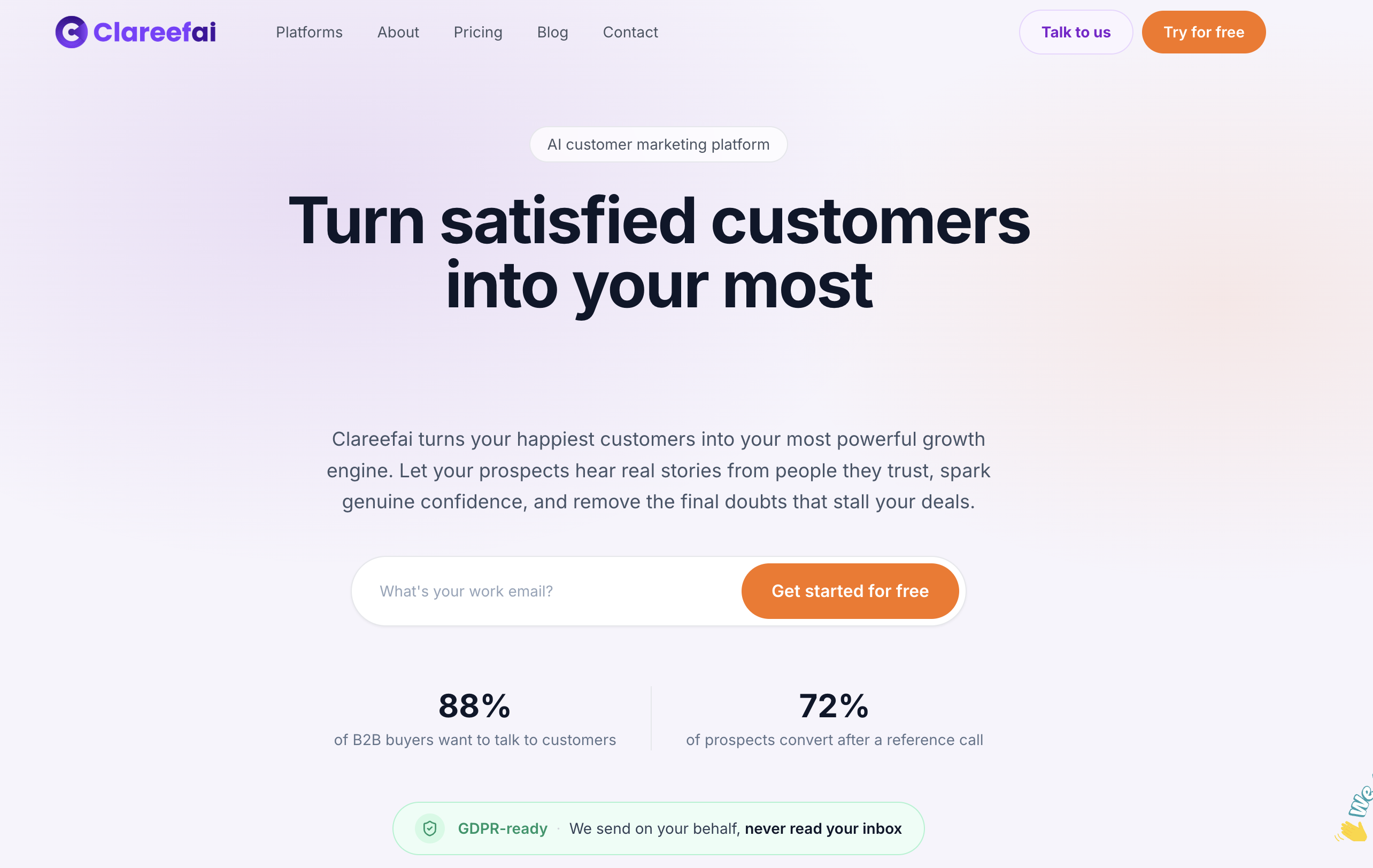
- Verification workflows that combine CRM matching, identity checks, and AI-driven pattern detection before anything publishes.
- Role-based dashboards so legal, marketing, and customer success each see what they need without full system access.
- Audit logs tied to every testimonial, from collection through publication.
- GDPR-aligned data handling built into storage and retention.
You can explore the Basic, Professional, and Enterprise plans or start with the free plan to see how a verified workflow fits your current process.
FAQ
What is testimonial data governance?
Testimonial data governance is the combination of policy, consent records, verification steps, and storage controls that determine how a company collects, verifies, stores, and publishes customer testimonials. It exists to keep testimonial content both legally defensible and genuinely trustworthy to prospects.
Does the FTC require businesses to verify every testimonial?
No, but the FTC’s rule expects businesses to act when a testimonial shows obvious red flags, such as unnatural timing or mismatched product details. Failing to act on a clear warning sign can trigger the same civil penalties as publishing a fake testimonial outright.
What counts as a ‘clear and conspicuous’ disclosure?
The FTC’s Endorsement Guides define it as a disclosure an ordinary user is unlikely to miss, appearing in both visual and audible form on interactive media when applicable. A disclosure buried in fine print or a video description generally does not meet that standard.
How long should we keep testimonial release records?
Keep release records for as long as the testimonial remains published, plus a buffer period after removal, since disputes can surface after content comes down. Set a clear deletion trigger tied to consent withdrawal or customer churn rather than an open-ended retention policy.
Can Clareefai help with FTC compliance specifically?
Clareefai’s verification workflow is built around the identity checks and documentation practices that the FTC’s testimonial rule expects, including CRM matching and audit-ready records. It does not replace legal review, but it gives your team a consistent process to point to if a testimonial is ever questioned.
Sources
- The Consumer Reviews and Testimonials Rule: Questions and Answers | Federal Trade Commission
- Federal Register: Statement of Basis and Purpose for the Consumer Reviews and Testimonials Rule
Recommended
Share Article
Stay Updated
Get the latest insights on customer advocacy and SaaS growth delivered to your inbox.