Handling Negative Testimonials: 5 Steps to Stay Within FTC Rules

When a negative testimonial lands, respond publicly and quickly with a short, empathetic acknowledgment, then invite the reviewer to continue privately so you can resolve the issue. Never offer or accept incentives tied to removing or softening the review, since the FTC’s final rule prohibits exactly that. We built this guide, and our platform, around making that response process fast, consistent, and defensible.
TL;DR:
- Match process complaints with facts and timelines, interpersonal complaints with empathy, and outcome disputes with both; research links tailored replies to fewer repeat complaints.
- Google removes reviews only for policy violations; reserve appeals for spam or fake accounts, and gather records or support logs before appealing.
- The FTC bars refunds, credits, or gifts conditioned on review removal or rewriting; reviewers may be asked to update posts after resolution, without conditions.
- Prioritize reviews by severity, visibility, recency, recurrence, and reviewer influence; answer public safety complaints within hours, while minor service complaints can wait a day.
Table of Contents
- Priority Checklist: Do’s and Don’ts for Handling Negative Testimonials
- A Copy-Ready Response Framework for Your SOP
- Match Your Tone to the Type of Complaint
- Platform-Specific Moves: When to Report and When to Respond
- Build a Triage System So You Respond to What Matters Most
- What the FTC and Platform Rules Actually Allow
- Why We See Negative Testimonials as Signals, Not Threats
- Turn Testimonial Governance Into a Growth Advantage
- FAQ
- Sources
Priority Checklist: Do’s and Don’ts for Handling Negative Testimonials
Speed matters more than most teams assume. Management responses are linked to measurably higher average ratings and more review volume for businesses that reply, according to research published in Marketing Science. A slow or silent response reads as indifference to everyone else reading the thread, not just the original reviewer.
Here’s a sequence you can hand to any team member on review duty:
- Reply promptly within a short timeframe. A quick acknowledgment signals that someone is paying attention, even before you have a full resolution.
- Lead with empathy, not defense. Say “we’re sorry this happened” before you explain anything. Avoid litigating facts in public, even when the reviewer got details wrong.
- Verify before you accuse. Check order records, support tickets, and account history before suggesting a review is fake or fraudulent. Public accusations that turn out wrong do more damage than the original complaint.
- Offer a path forward, not a public negotiation. State that you want to make it right and ask the reviewer to reach out directly, keeping specific remediation (refunds, credits, replacements) out of the public thread.
- Close the loop visibly. Once resolved, post a brief follow-up or ask the reviewer to update their rating. This shows future readers that complaints get handled.
Avoid common missteps: arguing point by point in the comments, copying and pasting the same generic reply across every review, or going quiet after the first response. Each of these signals a business that reacts rather than manages.
Pro Tip: Keep a shared log of every negative review and its resolution status so no one on your team replies twice with conflicting information.

A Copy-Ready Response Framework for Your SOP
A consistent structure keeps every team member’s reply on brand, even under pressure. We recommend building this four-step sequence into your customer service SOP:
- Acknowledge and thank: Open by thanking the reviewer for the feedback, even when it stings.
- Empathize and apologize: Name the specific frustration and apologize for the experience, not just “any inconvenience.”
- Explain or offer corrective action: Give a brief, factual explanation when the issue was procedural, or focus on the human impact when it was interpersonal.
- Close the loop and invite private follow-up: Provide a direct contact method and ask them to reach out so you can resolve specifics privately.
| Step | Goal | Public or private |
|---|---|---|
| Acknowledge | Show you saw the feedback | Public |
| Empathize | Validate the experience | Public |
| Explain or offer | Address the cause briefly | Public (brief), private (details) |
| Close the loop | Confirm resolution path | Private, with a public follow-up once resolved |
Save compensation specifics, account details, and internal process notes for private channels. Log each interaction, including complaint type and resolution, so your team can spot patterns across weeks or months rather than treating every review as a one-off.
Match Your Tone to the Type of Complaint
Not every negative review calls for the same response. Research on management responses distinguishes three complaint types: procedural (a process failed, like a late shipment), interactional (the person felt disrespected or ignored), and distributive (the outcome itself was unfair, like a wrong refund amount).
- For procedural complaints, lead with rational cues: what happened, what you’re fixing, and a timeline.
- For interactional complaints, lead with emotional cues: a genuine apology and acknowledgment of how the reviewer was treated.
- For distributive complaints, combine both: explain the correction and acknowledge the frustration.
Tailoring the cue mix to complaint type is associated with improved future review valence and fewer repeat complaints, according to research on management response strategies. A rational explanation aimed at someone who felt dismissed rarely lands, and an apology alone rarely satisfies someone waiting on a refund.
Sample phrasing: “We can see why the delay was frustrating. Here’s what happened and what we’re doing to prevent it” works for procedural issues. “We’re sorry you felt brushed off. That’s not how we want anyone to feel reaching out to us” fits interactional ones.
Platform-Specific Moves: When to Report and When to Respond
Flagging a review rarely gets it removed unless it breaks platform rules. Google’s own guidance states that reviews are removed only for content policy violations, not because a business disagrees with the complaint. A legitimate, if harsh, customer experience almost always stays live.
That changes your priorities:
- Reserve flagging for reviews that clearly violate policy: fake accounts, hate speech, spam, or posts with no connection to an actual transaction.
- Before appealing, gather evidence: order numbers, timestamps, support chat logs, or screenshots that support your case.
- For everything else, including scathing but genuine complaints, put your energy into the public response rather than the appeal queue.
- Treat Yelp and other platforms the same way: check their specific policy pages before assuming a review qualifies for removal.
Chasing takedowns on legitimate complaints wastes time your team could spend on the reply that actually shapes how prospects read the thread.
Build a Triage System So You Respond to What Matters Most
With dozens or hundreds of reviews across platforms, you need rules for where to look first. Prioritize by severity, visibility, recency, recurrence, and reviewer influence, since a high-visibility complaint compounds in impact every day it sits unanswered.
- Set alerts for new reviews across every platform you’re monitored on, so nothing sits unnoticed for days.
- Filter by sentiment and keyword to surface the most urgent complaints first, like mentions of safety, billing errors, or fraud.
- Build skeleton responses by complaint type, then require a two-line customization before anyone publishes one.
- Map severity to response time: a public safety complaint might need a reply within hours, while a minor service gripe can wait a day.
Pro Tip: Assign one owner per severity tier so urgent complaints never sit in a shared inbox waiting for someone to claim them.
What the FTC and Platform Rules Actually Allow
The FTC’s Consumer Reviews and Testimonials Rule bans buying or faking reviews, offering incentives tied to a positive rating, certain undisclosed insider testimonials, and deceptive suppression of honest negative feedback. Knowing violations can carry civil penalties.
- Never offer a refund, credit, or gift conditioned on removing or rewriting a negative review.
- You can ask a reviewer to update their post after you’ve genuinely resolved their issue, as long as nothing is conditioned on the outcome.
- Avoid threatening legal action against a reviewer unless you have clear evidence of fraud, extortion, or defamation, and document every step if you escalate.
- Review gating practices, like only asking happy customers to leave public reviews while routing unhappy ones elsewhere, fall under the same scrutiny.
The rule took effect following an August 2024 announcement, and it reshapes how seriously teams need to treat review solicitation and incentive policies going forward, as described in the FTC’s own release.
Why We See Negative Testimonials as Signals, Not Threats
A negative testimonial handled well becomes proof that you listen. Verification and clear governance cut through the confusion that lets a single bad review spiral, letting your team resolve issues faster and with more confidence. We built our platform around treating every piece of feedback, good or bad, as a signal worth routing to the right team and acting on.
— ClareefAi
Turn Testimonial Governance Into a Growth Advantage
Handling negative testimonials well is only half the job, and partnering with an expert in review acquisition and reputation services can help you manage high-volume responses effectively. The other half is making sure your verified, positive testimonials carry real weight with prospects, and that’s where our platform comes in. We help revenue teams verify customer identities, use AI to identify your strongest promoters, and automatically surface authentic testimonials, reference calls, and video reviews across the channels that matter to buyers.
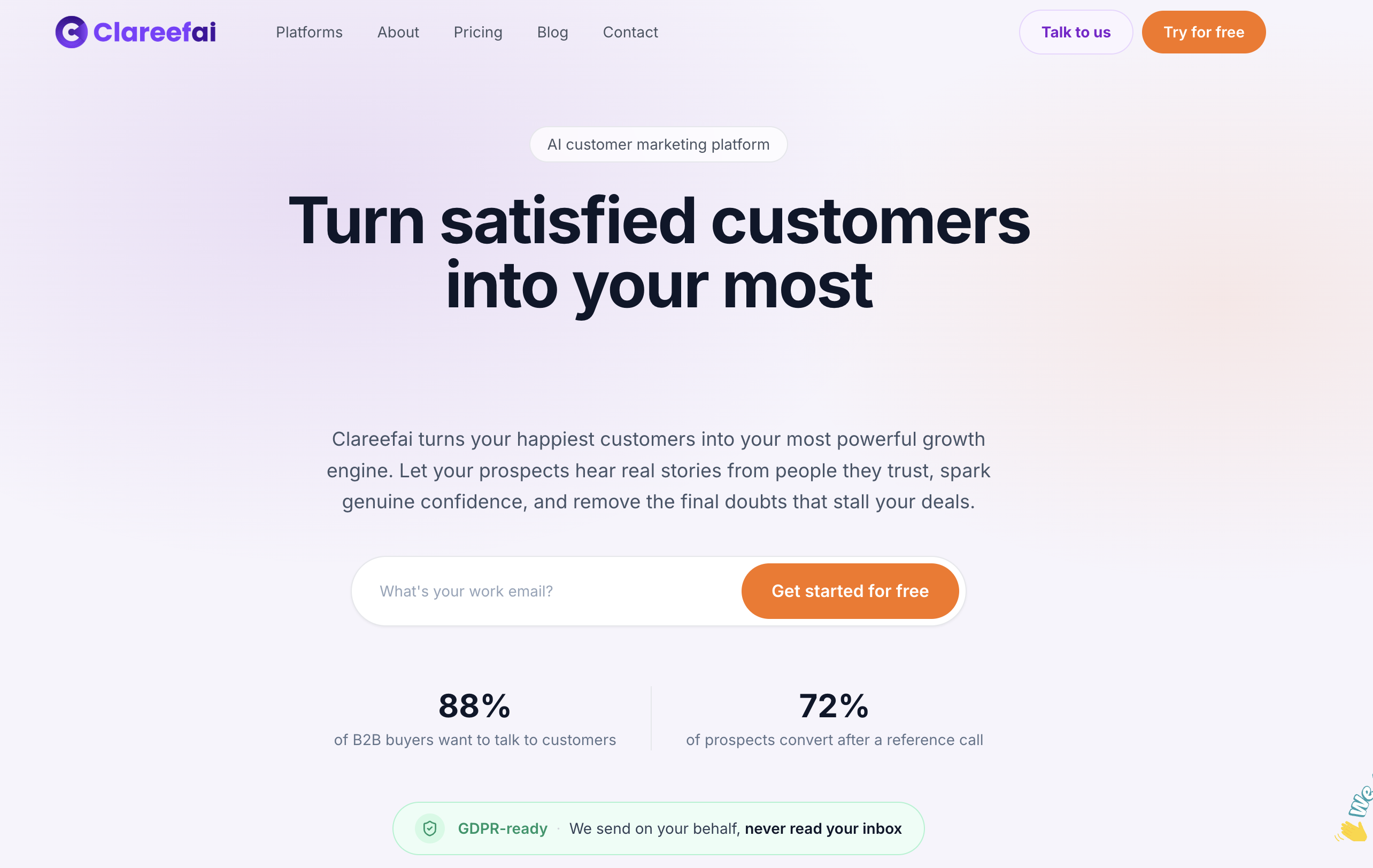
- Verification workflows that support report appeals and back up your claims if a review’s authenticity is ever questioned.
- GDPR-compliant governance that keeps your testimonial collection process audit-ready as FTC scrutiny increases.
- Dashboards and analytics that show which advocates and testimonials are actually moving deals forward.
Our Basic plan starts at $250 per month, with Professional and Enterprise tiers available as your testimonial program scales. Explore our plans or see how centralized testimonial governance improved win rates in this use case.
FAQ
What’s the best way to respond to a negative review quickly?
Reply promptly with a brief, empathetic acknowledgment, then invite the reviewer to continue the conversation privately. Management responses are linked to higher average ratings and more review volume over time, according to research in Marketing Science.
Can a business post fake testimonials on its website?
No. The FTC’s final rule prohibits fake or bought reviews and testimonials, and knowing violations can carry civil penalties. Testimonials need to reflect genuine customer experiences, verified where possible.
What does the FTC rule on consumer reviews actually cover?
The rule bans buying or faking reviews, offering incentives conditioned on sentiment, certain undisclosed insider testimonials, and deceptive suppression of honest negative feedback. You can read the FTC’s own guidance for specific examples of prohibited practices.
What should I check before assuming a bad review is fake?
Verify against order records, support logs, and account history before publicly questioning a review’s authenticity. A measured reply asking for more detail while you investigate is usually the safer first move than a public accusation.
Does Google ever remove a negative review for me?
Only if the review violates Google’s content policies, such as spam or fake accounts; a legitimate but harsh complaint typically stays live. According to Google’s own policy, your time is usually better spent on a strong public response than an appeal.
Sources
- Federal Trade Commission Announces Final Rule Banning Fake Reviews and Testimonials | Federal Trade Commission
- Report, flag, or remove a review - Google Business Profile Help
- Online Reputation Management: Estimating the Impact of Management Responses on Consumer Reviews | Marketing Science
- Tailoring management response to negative reviews: the mix of rational and emotional cues (ACM / Information Systems Research summary)
Recommended
Share Article
Stay Updated
Get the latest insights on customer advocacy and SaaS growth delivered to your inbox.