Localize B2B Testimonials in 8 Steps, From FTC Disclosure to SEO

Localizing testimonials means adapting language and cultural cues in a verified customer endorsement while keeping the speaker’s real voice intact. The approach we recommend runs in five moves: verify, translate and adapt, add language metadata, publish, and measure. We built our platform around this exact sequence, and it leans on established guidance like W3C language tagging and FTC disclosure rules to keep every localized asset credible and compliant.
TL;DR:
- Choose testimonials for sales stage and proof strength, renew permission for each use, disclose incentives in the audience’s language, and preserve every stated metric exactly.
- Use machine translation with human editing for volume, reserve human translators for flagship accounts, and ask a native speaker to check tone before publication.
- Tag each version with its BCP47 language code, set the HTML lang attribute, add reciprocal hreflang links and a canonical URL, and include Review markup with inLanguage.
- Place localized quotes on regional landing pages and relevant product pages, then compare variants with a holdout group using conversion and pipeline measures by market.
- Translate the strongest global case studies when entering a market, then collect original local testimonials as it matures because local voices carry more weight.
Table of Contents
- Practical 8-step checklist to localize a testimonial asset
- How to tag language and SEO metadata for localized testimonials
- Adapting tone and credibility markers for each market
- Running the collection and verification workflow at scale
- Where to place localized testimonials and how to measure them
- Why verified, localized testimonials are a revenue asset
- How Clareefai helps you localize and verify testimonials
- FAQ
- Sources
Practical 8-step checklist to localize a testimonial asset
Localizing a testimonial well is a sequence, not a single translation step. Skip a step and you end up with copy that reads fine but doesn’t convert in the new market.
- Select the asset based on sales stage and how strong its proof points are, not just how recent it is.
- Secure permission again for the new use case, and add a disclosure where a relationship or incentive needs flagging.
- Choose your translation workflow: machine translation with human review for volume, human-only for flagship accounts.
- Set a Time to Edit target so your team knows how much post-editing each testimonial should realistically need.
- Preserve the core metrics (percentages, timeframes, outcomes) exactly as stated, and adjust only the narrative framing around them.
- Produce every format you need: translated text, subtitled or dubbed video, and localized screenshots or graphics.
- Apply language metadata before anything goes live, not as an afterthought.
- Publish to the right regional page and track how it performs against the original.
Pro Tip: Keep a shared glossary of industry terms and approved phrasing so every translator and reviewer uses the same vocabulary across markets.
How to tag language and SEO metadata for localized testimonials
Search engines and browsers need to know what language a testimonial is in before they can serve it to the right audience. Getting this wrong buries good content in the wrong market’s results.
- Use canonical BCP47 language tags and set the HTML
langattribute at the page level, or at the span level for pages that mix languages. - Implement hreflang annotations or build separate language-indexed pages for each regional variant, and confirm each has a clear canonical URL.
- Publish JSON-LD schema.org Review markup with the
inLanguageproperty set for every localized testimonial instance. - Store testimonial text as language-tagged strings in your CMS or API layer so your localization pipeline doesn’t have to guess later.
- Run a QA pass before deployment: validate
langattributes, confirm hreflang pairs point both ways, check JSON-LD syntax, and verify canonical tags resolve correctly.
W3C’s internationalization guidance recommends exactly this pairing of BCP47 tagging with schema.org inLanguage markup so search engines index localized testimonial content correctly rather than treating every translated page as duplicate content.
Adapting tone and credibility markers for each market
Literal translation and real localization are different jobs. A testimonial translated word for word can still miss what actually persuades a buyer in that market.
Buyers in individualist markets often respond to a named decision maker claiming personal credit for a result. Buyers in more collectivist markets often respond better when the testimonial credits a team or a broader organizational win. Beyond tone, check that units, currency, and date formats match local convention, and that industry terminology matches how practitioners in that market actually talk about the problem.
A tiered approach works well as you expand: translate your strongest global case studies first to support new-market entry, then invest in collecting fresh local testimonials once that market matures, since local voices tend to carry more weight with local buyers. Translated’s research on social proof notes that generic machine translation often strips the emotional nuance out of a testimonial, which is exactly why a human review pass matters before anything publishes.
Pro Tip: Run new localized testimonials past a native speaker on your team before publishing, even if a professional translator already reviewed them.

Running the collection and verification workflow at scale
A repeatable workflow is what separates a localization project from a localization program. Ours runs in six stages: collect, verify, translate and adapt, tag with metadata, publish, and measure.
Verification matters as much in a localized testimonial as in the original one. That means identity checks, signed release forms, and AI-assisted screening for signs of fabricated or coerced feedback, in line with the FTC’s Consumer Reviews and Testimonials Rule, which treats testimonials as advertising and expects disclosures that ordinary consumers can actually notice and understand.
Inside Clareefai, this looks like:
- A centralized repository that holds every verified testimonial, text and video, across every market you serve.
- Identity-verified advocates matched to the right prospect or sales stage through AI-driven analysis.
- Publishing tiers built for HubSpot and CRM syncing, so localized testimonials move straight into sales workflows.
- Multilingual collection support, so you’re gathering original local feedback, not just translating what you already have.
One of our customers saw a significant lift in marketing effectiveness after restructuring how testimonials were placed and managed on their site, a reminder that the workflow around a testimonial often matters as much as its content.
Where to place localized testimonials and how to measure them
Placement decides whether a well-localized testimonial ever gets seen. Put the strongest localized quotes on regional landing pages, relevant product pages, sales enablement playbooks, and localized case studies, matched to the stage of the funnel each piece supports.
- Test localized variants against a holdout group rather than assuming a translation performs the same as the original.
- Track click-through rate to demo, demo-to-opportunity conversion, and win-rate lift by market.
- Attribute pipeline influence directly to testimonial-driven touches wherever your CRM allows it.
- Rotate your highest-performing localized advocates into ongoing reference call programs once you see what converts.
W3C’s string-level language metadata guidance points out that storing localized strings with explicit language tags makes A/B testing across markets far more reliable, since you’re comparing like for like instead of guessing at what changed.
Why verified, localized testimonials are a revenue asset
Most teams treat testimonial localization as a translation task handed off to a vendor. We see it as pipeline infrastructure: a verified, well-placed local testimonial shortens the trust-building step in every deal it touches. Technology can catch fraud and flag disclosure gaps, but a human still needs to confirm the voice sounds like the customer who gave it. Treat the localization work as an investment with a payback period, not a line item.
— ClareefAi
How Clareefai helps you localize and verify testimonials
We built Clareefai to run every step in this article from one dashboard: identity verification, multilingual collection, HubSpot-ready publishing, and analytics that tie testimonials back to pipeline. 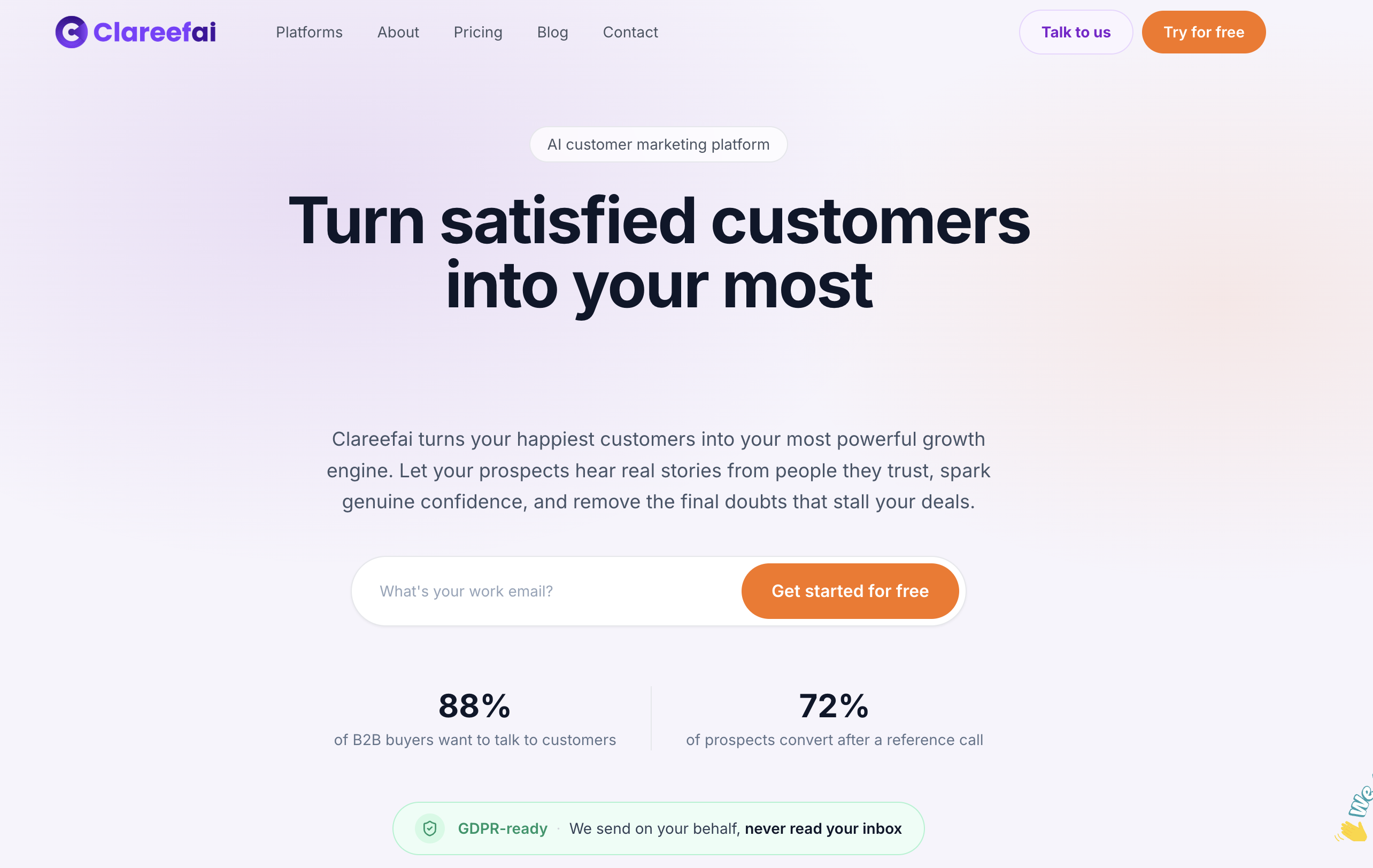
Instead of juggling spreadsheets, release forms, and translation files across teams, you get a single verified repository that your sales and marketing teams can both draw from, with AI-driven matching that surfaces the right advocate for the right prospect. For multi-market rollouts, our multilingual collection tools work alongside governance practices like the ones outlined in this multi-location SEO governance guide, which covers the broader publishing controls that pair well with hreflang and canonical setup.
Compare our Basic, Professional, and Enterprise plans, or start with our free plan if you want to see the verification workflow in action before committing to a tier.

FAQ
What does it mean to localize a testimonial?
Localizing a testimonial means adapting its language, tone, and cultural references for a new market while keeping the original speaker’s verified identity and the facts they stated intact. It’s different from a straight translation because it also adjusts narrative framing, units, and credibility cues to match what resonates with that market’s buyers.
Do localized testimonials need their own disclosure in the local language?
Yes. The FTC’s guidance on endorsements states that a disclosure in a different language than the testimonial risks being ineffective for a microtargeted audience, so any disclosure needs translating along with the testimonial itself.
Should we use machine translation or human translators for testimonials?
A hybrid workflow works best for most volume: machine translation for a first pass, with human post-editing to restore emotional tone and correct industry terminology. Translated’s guidance on social proof recommends this pairing specifically because generic machine translation tends to flatten the nuance that makes a testimonial persuasive.
How do we make localized testimonials show up correctly in search results?
Tag each localized version with the correct BCP47 language code, set the HTML lang attribute, and add hreflang links between language variants, then publish JSON-LD schema.org Review markup with the inLanguage property set. This combination tells search engines which audience each version is meant for, rather than treating translated copies as duplicate content.
Should we translate existing case studies or collect new local testimonials?
Start by translating your strongest existing global case studies to support entry into a new market, then shift toward collecting original local testimonials as that market matures. Translated’s research found this phased approach builds credibility faster than relying on translated content indefinitely.
Sources
- Internationalization Best Practices for Spec Developers
- Translating social proof: why testimonials, ratings, and case studies need more than word-for-word conversion - Translated
- The Consumer Reviews and Testimonials Rule: Questions and answers | Federal Trade Commission
Recommended
Share Article
Stay Updated
Get the latest insights on customer advocacy and SaaS growth delivered to your inbox.