30–90s Testimonial Design Examples for B2B That Map to Deal Stage
The best testimonial design examples for B2B teams are not visual templates. They are structured, verified sales assets: 30 to 90-second executive video clips, written case studies based on baseline-intervention-outcome frameworks, and objection-mapped micro-testimonials, all tagged to deal stage and stored where reps can grab them mid-call. The winning operating model treats testimonials as a repeatable pipeline, not a one-off ask: automated collection triggers, signed usage releases, and CRM tagging that ties each asset to the buyer persona and objection it answers.
TL;DR:
- Video and written testimonials should be part of a repeatable pipeline with automated collection, verification, and CRM tagging tied to deal stage and persona.
- Different buyers respond best to specific formats: executives prefer short video endorsements, technical buyers want detailed case studies, and procurement values compliance and risk reduction proof.
- Collect testimonials at key moments such as renewals or milestones using structured interviews and signed release agreements to ensure assets are verifiable and legal.
- Repurpose one interview into multiple assets like case studies, social clips, and slide content to maximize value across the sales cycle.
- Tracking testimonial usage and impact on deal progression provides measurable proof of ROI, encouraging consistent, strategic testimonial programs over ad hoc efforts.
Table of Contents
- Which Testimonial Formats Actually Move B2B Deals?
- How Do You Collect and Verify Testimonials at Scale?
- Where Does Each Testimonial Fit in the Deal Cycle?
- How Do You Turn One Interview Into a Testimonial Library?
- What Should You Track to Prove Testimonial ROI?
- Why Testimonials Work Best as a Repeatable Revenue Asset
- How Clareefai Makes Testimonial Programs Actually Run
- Sources
Which Testimonial Formats Actually Move B2B Deals?
Different buyers respond to different proof, and enterprise deals usually involve three or four people who each need a different flavor of evidence. Matching format to buyer is the whole game.
Video testimonials from client leadership carry the most weight with executive buyers. A 30 to 90 second clip of a VP or CFO describing measurable results tends to outperform written quotes when it lands inside a proposal or procurement packet, largely because executive video testimonials increase engagement and credibility at exactly the point where a deal needs a final signature.
Written case studies built on a BIO framework (baseline, intervention, outcome) give analytical buyers something written quotes cannot: a full narrative with numbers they can cite in their own internal business case. This format shows up constantly during RFPs, and its structure makes it easy to slice into shorter assets later.
- Objection-handling clips mapped to price, compliance, or fit concerns, dropped directly into the CRM record for reps to send the moment an objection surfaces
- Executive quote snippets pulled for proposals, landing pages, and pitch decks
- Email case-study sequences that nurture buyers through a six-month or year-long enterprise cycle
- Aggregated trust indicators, like logo walls or review counts, for high-velocity, low-touch conversion points
- Long-form interviews in podcast or webinar format, built for thought leadership rather than a single deal
Pro Tip: Don’t produce a new asset for every format. Record one 20 minute structured interview and cut it into a video clip, a written case study, and three social pull quotes. One conversation, five assets.
How Do You Collect and Verify Testimonials at Scale?
Most testimonial programs stall because teams ask at the wrong moment or skip the paperwork that makes an asset publishable. Fix the timing and the process, and volume follows.
- Ask at the trigger point. The best moments are a renewal signature, a milestone completion, or a clear win signal like a positive NPS response or an expansion request, not a random quarterly check-in.
- Run a structured interview. Use a STAR or BIO question set (Situation, Task, Action, Result, or Baseline, Intervention, Outcome) so the conversation produces a measurable outcome, not a vague compliment. Structured interviews and repurposing produce usable, scalable proof far more reliably than an open-ended “how’s it going” call.
- Get a written release before you publish anything. A minimum release should cover usage scope, which platforms the quote or video can appear on, duration, and a specific clause for video permissions, since formal written releases with explicit usage terms protect both sides and speed up legal review later.
- Verify before publishing. Confirm the person’s title, company, and any claimed metric against internal records, and keep a corroborating data point on file.
- Assign ownership. Name who triggers the ask, who runs the interview, who chases the release, and who tags the finished asset in the CRM.
Pro Tip: Build the release request into your win-signal workflow so it fires automatically. Waiting until “later” is how most testimonial programs quietly die.
Where Does Each Testimonial Fit in the Deal Cycle?
An asset that closes a renewal will not move a first-touch qualification call, so mapping matters as much as producing the content.
- Qualification stage: short, aggregated trust indicators and logo walls build baseline credibility fast
- Evaluation stage: BIO case studies and long-form interviews give technical buyers the depth they need to compare vendors
- Procurement stage: executive video clips and compliance-focused objection testimonials carry the most influence, since objection-handling libraries embedded in CRM workflows reduce friction at exactly the point where a deal can stall
- Renewal or expansion stage: outcome-focused quotes from the champion’s own team reinforce the original business case
Persona matters too. Executives respond to outcomes and risk reduction, technical buyers want implementation detail, and procurement wants compliance and pricing validation. Tag each asset in Salesforce or HubSpot with persona, objection, and stage metadata so a rep can search “compliance objection, procurement stage” and get a usable clip in seconds instead of digging through a shared drive.
How Do You Turn One Interview Into a Testimonial Library?
A single structured interview should feed months of sales and marketing content if you repurpose it properly. The pathway runs long-form case study, then pull quotes, then 30 to 45 second video clips, then social posts, then slide-ready deck assets.
- Publish the full case study on a dedicated context page, then link it into how customer testimonials build trust and turn into sales assets
- Post short clips to LinkedIn and embed them in outbound sales sequences
- Feature the same interview in a webinar or a company trust page
- Attach transcripts and captions to every video, since captions and transcripts boost discoverability and make pull quotes easy to extract later
- Build a separate compliance packet version for procurement reviewers who need a written record, not a video link
A pattern for engaging content also helps here: organic content structures that scale apply just as well to testimonial pages as they do to blog posts, since both live or die on clear structure and fast load times.
What Should You Track to Prove Testimonial ROI?
Testimonials only earn their keep if you can show they moved a number. Track usage events (how often a rep pulls an asset into an email or call), stage progression after the asset was used, and any measurable close-rate lift or reduction in time spent in a given stage.
- Log every testimonial share as a CRM event, not just a file download
- Run a simple before/after comparison on deals that used a specific objection clip versus deals that did not
- Keep a governance checklist: signed release on file, usage scope documented, archive date set, and a review cadence for expiring permissions
- Avoid generic quotes entirely, since unverifiable, generic praise reduces conversion for high-ticket buyers and can undercut a deal instead of helping it
Why Testimonials Work Best as a Repeatable Revenue Asset
Most teams treat testimonials as a marketing errand, something to collect when someone remembers. That’s the core mistake. Treated as an operational asset class, with a consistent collection trigger, a verification step, and CRM tags tied to persona and stage, testimonials stop depending on memory and start compounding.
This was built around a model with AI-driven identification of advocates, identity and release management, and dashboards to keep assets tagged and searchable by role. Run a pilot project. Collect several stage-mapped assets, tag them, and measure how often reps actually use them. The usage number will tell you more than any survey ever could.
— ClareefAi
How Clareefai Makes Testimonial Programs Actually Run
A platform exists to run everything described above without stitching together spreadsheets, a video vendor, and a legal tracker. It automates collection at chosen trigger points, verifies customer identity and title, stores signed releases, and tags each asset by persona, objection, and deal stage so it syncs with CRM.
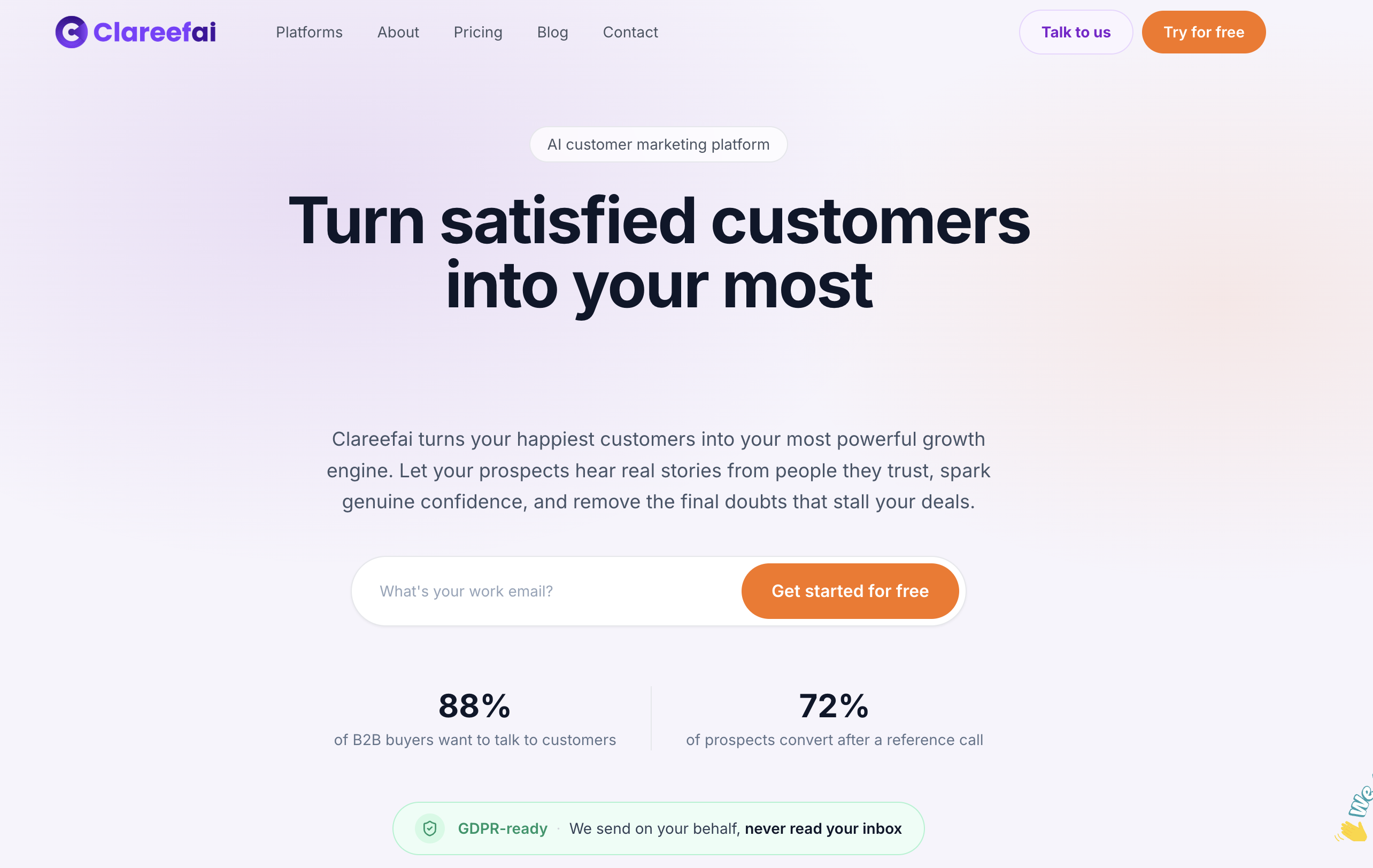
Marketing teams get a way to turn customer advocacy into repurposable content, sales leaders get unified testimonial management built to lift win rates, and management gets a dashboard for measuring advocacy ROI directly instead of guessing at it from anecdotes. If you’re still collecting testimonials by email and pasting quotes into decks by hand, start a trial and map your first three stage-based assets this week.
Sources
- 8 Powerful B2B Example of Testimonial Formats for 2026
- Salesforce Sales Enablement Video Testimonials: Deal-Stage Proof That Closes Faster
- B2B Customer Testimonials & Case Studies: How-To Guide
- Why generic testimonials are killing your high-ticket B2B conversion?
Recommended
Share Article
Stay Updated
Get the latest insights on customer advocacy and SaaS growth delivered to your inbox.