How to Verify Reviews: A Practical 2026 Guide
TL;DR:
- Verifying reviews involves checking for verified purchase badges, natural rating distributions, and reviewer history. Cross-platform comparison, community feedback, and review timing reveal manipulation and authenticity. Businesses must obtain documented consent and verify customer identity before publishing testimonials.
Review verification is the process of confirming that customer feedback is genuine, unmanipulated, and tied to a real purchase or service experience. Fake reviews cost consumers and businesses billions in misplaced trust each year, and the tactics behind them grow more sophisticated every cycle. Knowing how to verify reviews before acting on them, whether you are buying a $20 gadget or evaluating a B2B vendor, is now a baseline skill. The core filters are verified purchase badges, rating distribution analysis, reviewer profile history, and cross-platform consistency checks. This guide walks you through each one, plus the business-side steps for verifying testimonials before publishing them.
How to verify reviews: key indicators of authenticity
The fastest filter for any review is the verified purchase badge. Platforms like Amazon attach this label when the reviewer bought the product through that platform. Verified purchase badges serve as the first line of defense against fabricated feedback, especially for low-stakes items under $30 where a quick histogram scan plus three to five verified reviews is all you need.

Rating distribution tells you more than the star average ever will. A genuine product typically shows 60–70% of ratings at four or five stars, with a visible spread across two, three, and one star ratings. A histogram that shows almost nothing below four stars is a red flag. Coordinated review campaigns push scores artificially high, and the distribution collapses into an unnatural spike at the top.
Three-star reviews are the most honest ones on any platform. Reviewers who leave a middling score have no strong emotional motive to exaggerate in either direction. They describe what worked, what did not, and why. Reading five of them gives you a more accurate picture than reading fifty five-star reviews.
Reviewer profile history is the third check. A real reviewer has a history spanning months or years, covers multiple product categories, and shows a mix of star ratings. A profile created last month with twenty five-star reviews for similar products is almost certainly part of a coordinated effort.
- Verified purchase badge present: Strong signal of authenticity
- Rating histogram shows natural spread: Healthy sign; no unnatural clustering
- Reviewer has long, varied history: Indicates a real person with genuine opinions
- Review language is specific: Mentions product dimensions, use cases, or comparisons
- No burst of reviews in a short window: Gradual accumulation is normal
Pro Tip: Sort reviews by “most recent” and look at the last 30 days. If a product suddenly gained 40 reviews in a week with no product launch or promotion, that burst pattern is a strong indicator of a coordinated campaign.
How do cross-platform checks strengthen review validation?
Cross-platform comparison is one of the most reliable methods for verifying online reviews. A product rated 4.8 stars on one platform but 2.9 on another signals probable review inflation or fake feedback. That one-star-plus discrepancy is the threshold where you should treat the higher score with serious skepticism.
The platforms worth checking depend on what you are evaluating. For consumer products, compare Amazon, Walmart, and a retailer’s own site. For software and B2B services, check Trustpilot, G2, and Capterra. For local businesses, compare Google Reviews with Yelp and the Better Business Bureau. Each platform has different screening standards, which is exactly why discrepancies reveal manipulation.
Independent communities add a layer that no review platform can replicate. Reddit threads and YouTube video reviews come from people who have no incentive to inflate or deflate a score. A YouTube reviewer who spent 15 minutes testing a product on camera is harder to fake than a text review. Search the product name plus “Reddit” or “review” on YouTube and read the comment sections.
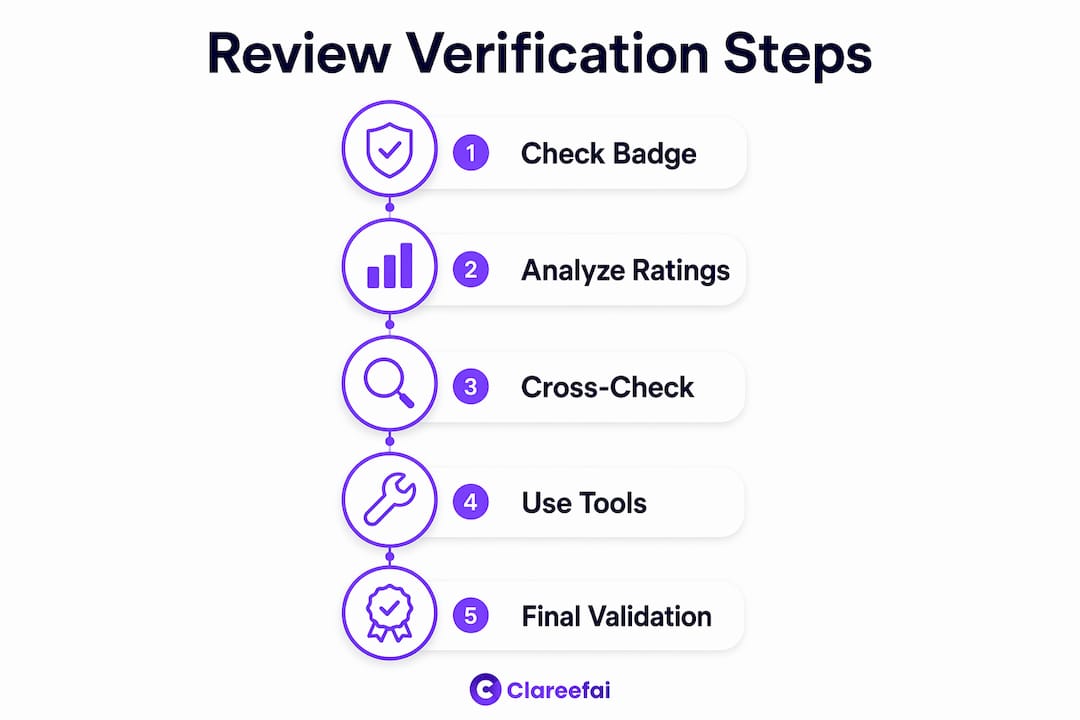
Here is a practical cross-platform verification process:
- Check the primary platform first. Note the star average, total review count, and histogram shape.
- Search two or three independent platforms. Look for the same product or service and record each score.
- Flag discrepancies over one full star. A gap that large almost always reflects manipulation on one side.
- Search Reddit and YouTube. Look for unprompted discussions and video walkthroughs.
- Check the BBB or FTC complaint database for businesses. Formal complaints are harder to suppress than reviews.
- Note the review volume timeline. Review bursts within 24–48 hours indicate coordinated fake campaigns.
Amazon applies a 72-hour screening period to new reviews before they go live. That process filters out obvious spam and irrelevant content. Even so, sophisticated fake review networks pass that screen, which is why cross-platform checks remain necessary.
Pro Tip: Browser extensions that analyze review authenticity patterns are widely available in the Chrome Web Store. Search for “fake review detector” and choose one with active maintenance and a strong user rating. These tools flag suspicious patterns in seconds without requiring manual histogram analysis.
Steps to validate reviews and testimonials for businesses
Businesses face a different challenge. You are not just checking whether to trust a review. You are deciding whether to publish a testimonial as a marketing asset. That requires a more formal process, and the stakes are higher because the FTC endorsement guidelines hold you accountable for what you display.
Verification starts at the request stage. When you ask a customer for a testimonial, request explicit written consent for how you plan to use it, including their name, photo, company logo, and any specific quotes. Generic praise without consent documentation is both legally risky and unconvincing to prospects.
Visual testimonials require an extra layer of scrutiny. A photo of a real person, a recognizable company logo, and a job title all add credibility. Confirm that the image matches the person’s LinkedIn profile or company website. A stock photo attached to a glowing quote is a credibility liability, not an asset.
The internal checklist every business should use:
- Confirm purchase or service history. Match the reviewer’s name or email to your CRM records.
- Check the timing. A testimonial submitted immediately after a sale may reflect post-purchase enthusiasm rather than real results.
- Evaluate the language. Specific details like product names, timelines, and measurable outcomes signal authenticity. Vague praise like “great service” does not.
- Inspect metadata where available. Platforms use timestamps, device tags, and verified purchase tokens to authenticate reviews. If your platform surfaces this data, review it.
- Run AI language detection on bulk submissions. Automated tools now analyze language patterns and flag reviews that read like generated content.
| Verification step | What it confirms |
|---|---|
| Written consent with usage details | Legal compliance and reviewer identity |
| CRM purchase match | Real customer relationship exists |
| Specific language and measurable outcomes | Genuine experience, not generic praise |
| Photo or logo cross-check | Visual identity is authentic |
| Metadata and timestamp review | No suspicious timing or device anomalies |
For high-value purchases over $100, stricter protocols apply. Add purchase proof, cross-platform checks, and metadata audits to your standard process. The higher the stakes, the more documentation you need before publishing or acting on a testimonial. Platforms like Clareefai centralize this process by verifying customer identities and contextualizing feedback before it goes live, which removes the manual burden from your team.
Common mistakes when checking reviews and how to fix them
The most common mistake is stopping at the star rating. A 4.6-star average tells you nothing about whether those stars were earned. The rating is a summary of the content below it. Always read the actual reviews, especially the three-star ones.
Ignoring reviewer profile quality is the second major error. A reviewer with one review, created last week, carrying a five-star rating for a product in a competitive category deserves zero weight. Profile depth and history are the human equivalent of a verified purchase badge.
- Overtrusting seller-hosted reviews: Seller-hosted platforms may filter or suppress negative feedback. Always cross-reference with independent third-party sites like Trustpilot or the BBB.
- Missing review burst patterns: A sudden cluster of reviews around a product launch or promotional period is a known tactic. Check the review timeline, not just the total count.
- Applying the same standard to every purchase: A $15 phone case and a $500 software subscription require different levels of scrutiny. Scale your verification effort to the stakes involved.
- Skipping video and community sources: Text reviews are easy to fabricate at scale. Video reviews and Reddit threads require real effort and are far harder to fake.
Pro Tip: For B2B software decisions, search the vendor name on LinkedIn and look for posts from actual users. Real customers mention their tools organically. If you find nothing, that absence is data worth noting.
The insight that verification works best when built into the testimonial request stage applies to businesses on both sides of the transaction. Collecting detailed, consent-backed feedback from the start eliminates most downstream verification problems.
Key Takeaways
Verifying reviews requires combining verified purchase signals, cross-platform consistency checks, reviewer profile analysis, and documented consent to separate genuine feedback from manipulated content.
| Point | Details |
|---|---|
| Start with verified purchase badges | This is the fastest filter for authentic reviews on major platforms. |
| Read three-star reviews first | Mid-range reviews deliver the most balanced and honest customer perspectives. |
| Cross-platform discrepancies signal fraud | A gap of more than one full star between platforms indicates probable manipulation. |
| Businesses need documented consent | Written approval and CRM matching are required before publishing testimonials. |
| Scale scrutiny to purchase value | High-value decisions require metadata audits, purchase proof, and cross-platform checks. |
What I have learned from years of watching review verification evolve
The conventional advice on spotting fake reviews focuses almost entirely on star ratings and review counts. That advice is outdated. The most sophisticated fake review operations today produce reviews that pass every surface-level check: verified purchase status, detailed language, and long reviewer histories. The real signal is cross-platform consistency combined with community-sourced feedback.
What I have found actually moves the needle is treating three-star reviews as primary sources. They are the ones written by people who have no agenda. They bought the product, used it, and reported back without the emotional charge of a five-star fan or a one-star complaint. When I evaluate a vendor or product for Clareefai’s own use, I read the three-star reviews before anything else.
The other lesson is that human judgment and automated tools are not substitutes for each other. AI language detection catches patterns that humans miss at scale. But a human reviewer catches context that an algorithm cannot, like a testimonial that sounds genuine but comes from a company that has a financial relationship with the vendor. You need both.
Fake review tactics evolve faster than platform policies. Review bursts used to be obvious. Now they are spread across weeks to avoid detection. The best defense is a layered verification habit: check the histogram, read the mid-range reviews, cross-reference two or three independent platforms, and look for community-sourced evidence. That combination catches what any single check misses.
— ClareefAi
Clareefai makes authentic testimonial management practical
Collecting and verifying testimonials manually is time-consuming, and the margin for error is high. Clareefai is built to handle exactly this challenge at scale.
Clareefai verifies customer identities, contextualizes feedback, and surfaces your most credible advocates automatically. The platform connects prospects with real, named promoters through verified testimonials, video reviews, and comments, turning social proof into a sales asset rather than a compliance headache. Every testimonial goes through identity verification and consent documentation before it appears on your public channels. If you want to see how verified testimonials drive results in practice, Clareefai’s use cases show the full picture. You can also explore the full platform to see how verification, curation, and display work together.
FAQ
What is the fastest way to verify a review?
Check for a verified purchase badge first, then read three to five mid-range reviews with specific product details. Verified purchase status is the single fastest authenticity filter available on major platforms.
How do I spot fake reviews across platforms?
Compare star ratings across two or three independent platforms. A discrepancy of more than one full star between platforms signals probable review inflation or coordinated fake feedback.
What makes a business testimonial credible?
A credible testimonial includes the reviewer’s real name, company, job title, and specific details about their experience. Explicit written consent for the use of images and quotes is required for both legal compliance and audience trust.
What are review bursts and why do they matter?
Review bursts are sudden spikes in review volume within a short window, typically 24–48 hours. They indicate coordinated fake review campaigns and are one of the clearest red flags in review verification.
Do platforms screen reviews automatically?
Yes. Amazon, for example, applies a 72-hour screening process to filter out fake or irrelevant reviews before they go live. Automated tools also analyze metadata, timestamps, and language patterns to flag suspicious submissions at scale.
Recommended
- ClareefAI - Drive Sales Growth Using Customer Testimonials and Word-of-Mouth Marketing
- ClareefAI - Drive Sales Growth Using Customer Testimonials and Word-of-Mouth Marketing
- How Customer Testimonials Build Trust and Differentiate Your SaaS Brand | ClareefAI Blog
- How (and When) to Use Social Proof to Accelerate the Sales Cycle - ClareefAI Blog
Share Article
Stay Updated
Get the latest insights on customer advocacy and SaaS growth delivered to your inbox.